
Distracted driving happens when a driver’s attention shifts away from the road, even for a few seconds. It may seem harmless to glance at a text message, adjust the radio, check a GPS, or talk to a passenger, but those moments can change a person’s life. A driver who is not fully focused may miss stopped traffic, pedestrians, road hazards, or another vehicle changing direction.
At the Law Offices of Pius Joseph, Attorney Pius brings more than 29 years of experience helping injured people after serious motor vehicle crashes. The firm has handled personal injury claims involving distracted drivers and has helped clients pursue successful settlements after preventable accidents.
This article discusses the main types of distracted driving, why each is dangerous, and how it can lead to car crashes, injuries, and legal claims.
What Is Distracted Driving?
Distracted driving is any activity that pulls a driver’s attention away from the primary task of driving. A driver’s job is not only to keep the vehicle moving. They must watch the road, control the steering wheel, follow traffic laws, respond to hazards, and stay aware of other drivers, pedestrians, and passengers.
A distraction can interfere with one or more of these responsibilities. Some distractions are obvious, such as texting or holding a phone. Others are easier to overlook, such as eating, adjusting temperature controls, using navigation systems, or daydreaming.
Distracted driving is dangerous because safe driving requires full attention. When a driver’s eyes, hands, or mind are not focused on the road, their reaction time slows down. Even a brief distraction can cause a driver to travel a long distance without truly seeing what is happening around them. This is why distracted driving is sometimes described as “driving blind,” especially when a person looks away from the road while the vehicle continues moving.
What Are the Three Main Types of Distracted Driving?
The three main types of distracted driving are:
- Visual distractions, which take a driver’s eyes off the road.
- Manual distractions, which take a driver’s hands off the wheel.
- Cognitive distractions, which take a driver’s mind off driving.
Many distracted driving behaviors involve more than one category. Texting is a clear example because it can require a driver to look at a cell phone, use their hands to type, and focus on the message rather than the road. This combination makes texting especially dangerous.
Understanding these categories can help injured people, families, and drivers recognize how everyday actions can lead to serious motor vehicle crashes.
Visual Distractions: Taking Your Eyes Off the Road
 A visual distraction happens when a driver looks away from the road. This may only last a second or two, but that is enough time for traffic conditions to change.
A driver might look down at a phone, glance at a GPS, turn toward a passenger, or look out the window. During that moment, the driver may not see a vehicle braking ahead, a pedestrian entering a crosswalk, or another driver drifting into their lane.
Visual distractions are dangerous because driving depends heavily on what a person sees. A driver cannot respond to a hazard they never notice. When a driver’s eyes are off the road, the vehicle may still be moving at full speed while the driver’s awareness is temporarily lost.
Manual Distractions: Taking Your Hands Off the Wheel
A manual distraction occurs when a driver removes one or both hands from the steering wheel. A driver needs proper control of the vehicle to brake, steer, avoid hazards, and react to sudden movement from other drivers.
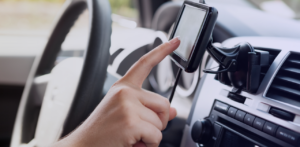
Manual distractions often seem routine. A person may reach for a drink, pick up a phone, change the radio, adjust temperature controls, or enter an address into a GPS. These actions may feel normal, but they reduce the driver’s ability to control the car.
Examples of manual distractions include:
- Texting while driving
- Holding or reaching for a phone
- Eating behind the wheel
- Drinking coffee, water, or another beverage
- Adjusting a GPS or navigation system
- Changing music or radio settings
- Reaching into a bag, purse, or glove compartment
- Picking up something from the floor or seat
- Adjusting temperature controls while the vehicle is moving
Manual distractions increase the risk of an accident because the driver may not be ready to make a quick correction. If another vehicle stops suddenly, a pedestrian steps into the road, or traffic changes direction, the driver may lose valuable time trying to regain control.
Keeping hands on the wheel is a basic part of safe driving. When a driver chooses another task over vehicle control, everyone nearby may be put at risk.
Cognitive Distractions: Taking Your Mind Off Driving
 Cognitive distraction occurs when a driver’s mind is focused on something other than driving. This type of distraction can be harder to see because the driver may still have their eyes on the road and their hands on the wheel.
However, looking forward is not the same as paying attention. A distracted driver may fail to process what they are seeing. They may overlook traffic signals, miss brake lights, forget to check mirrors, or fail to notice pedestrians and hazards.
Common cognitive distractions include:
- Daydreaming
- Talking on a phone
- Using a hands-free cell phone
- Having an intense conversation with passengers
- Thinking about work, stress, or personal problems
- Focusing on a text message or call after it ends
- Paying attention to children, pets, or activity inside the vehicle
Hands-free cell phone use is a common example of cognitive distraction. Even if a driver’s hands remain on the wheel, the conversation can still take the person’s attention away from the road. The driver may be mentally involved in the call rather than focused on driving conditions.
Cognitive distractions are dangerous because safe driving requires constant awareness. A driver must predict what other drivers might do, watch for pedestrians, control speed, and respond quickly. When the mind is somewhere else, reaction time can suffer.
Distracted Driving vs. Drunk Driving
Distracted driving and drunk driving are different, but both can make a driver dangerous.
Drunk driving affects judgment, coordination, reaction time, and decision-making. Distracted driving affects attention, awareness, and control. In both situations, the driver may fail to respond safely to what is happening on the road.
A distracted driver may be sober but still unable to drive safely because their attention is divided. For example, a driver reading a text message may fail to notice brake lights ahead. A driver using GPS may drift from their lane. A driver talking on the phone may fail to notice a pedestrian.
The key point is that a driver does not have to be impaired by alcohol to cause a serious accident. A moment of distraction can also lead to severe injuries or death.
How Distracted Driving Causes Motor Vehicle Crashes
Distracted driving causes crashes by interrupting the chain of safe driving. A safe driver must see a hazard, understand it, decide how to respond, and take action. Distractions can break that process at any point.
For example, a driver may:
- Fail to see stopped traffic
- Brake too late
- Drift into another lane
- Run a red light or stop sign
- Miss a pedestrian in a crosswalk
- Rear-end another vehicle
- Lose control while reaching for an item
- Turn without noticing oncoming traffic
- Fail to adjust speed for road hazards
Many distracted driving crashes happen quickly. A driver may only look away for a short time, but the consequences can be severe. At normal traffic speeds, a vehicle can cover a significant distance before the driver looks back up. If the driver is traveling faster, the danger increases.
Crashes involving distracted drivers can lead to broken bones, head injuries, back and neck injuries, spinal cord trauma, internal injuries, and long-term pain. In the most serious cases, distracted driving can cost lives.
Are There Laws Against Distracted Driving in Pasadena, CA?
Yes. Pasadena drivers are covered by California distracted-driving laws, and Pasadena Police actively enforce them.
According to the California Office of Traffic Safety, you cannot drive while holding a cell phone or similar electronic communication device. Phone use must be hands-free, such as speakerphone, Bluetooth, or voice commands. Drivers under 18 may not use a cell phone for any reason while driving.
For Pasadena specifically, Pasadena Police announced a 2026 distracted-driving enforcement operation targeting drivers who violate California’s hands-free law. The local report says the ban includes holding a phone or electronic device while operating a vehicle, including talking, texting, or using an app. A second violation within 36 months can add a point to the driver’s record.
Can a Distracted Driver Be Held Responsible for an Accident?
Yes. A distracted driver may be held responsible when their lack of attention causes an accident and injures someone.
Drivers have a duty to operate their vehicles safely. That means keeping their eyes on the road, hands on the wheel, and attention on driving. When a driver chooses to text, eat, adjust a device, talk on the phone, or engage in another distraction, they may be failing to meet that duty.
To bring a personal injury claim, the injured person generally needs to show that:
- The driver had a duty to drive safely
- The driver was distracted or otherwise careless
- That behavior caused or contributed to the accident
- The injured person suffered damages, including medical expenses, lost wages, pain, and other losses
Every case depends on the facts. However, when distraction plays a role in a crash, it may be an important part of proving negligence.
Talk to the Law Offices of Pius Joseph About a Distracted Driving Accident Case
After a distracted driving accident, the question is not only what caused the crash, but how the injury will affect your recovery, work, finances, and future. Insurance companies may move quickly, but injured people often need time to understand the full extent of their medical needs and losses.
The Law Offices of Pius Joseph can help you evaluate your options, preserve important evidence, and pursue a claim based on the facts of your accident. Whether the case involves a distracted driver’s phone use, unsafe driving behavior, or disputed liability, our firm can guide you through the legal process with clear, practical support.
If you were injured in a distracted driving accident, schedule a free consultation with our distracted driving lawyers to discuss your case and learn what steps may help protect your right to compensation.