
Automatic emergency braking (AEB) is moving from an optional feature to a safety system required by federal law on most new light vehicles in the United States. In 2024, the National Highway Traffic Safety Administration (NHTSA) adopted Federal Motor Vehicle Safety Standard (FMVSS) No. 127 under the Bipartisan Infrastructure Law.
For California drivers and crash victims, the shift from optional to required automatic emergency braking may affect how a crash is investigated. Driver conduct remains central, but evidence showing whether an AEB system warned, activated, or malfunctioned can influence negligence and product liability claims. Understanding the technology, the federal standard, and the need to preserve vehicle data can help protect an injured person’s legal rights.
As a Pasadena personal injury firm, the Law Offices of Pius Joseph provides general information about the federal AEB rule and its possible effect on California crash claims. This article is for educational purposes and is not legal advice for any specific case.
What Is Automatic Emergency Braking?
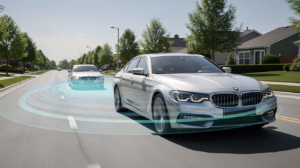
Automatic emergency braking is an advanced driver-assistance system that uses cameras, radar, or both to detect an imminent collision. If the driver does not brake in time, or does not apply enough force, the system can automatically apply or increase braking to avoid contact or reduce the impact speed.
Many AEB systems operate with forward collision warning as part of a broader package of advanced driver-assistance systems (ADAS). In a typical rear-end collision scenario:
- Sensors identify a slower or stopped vehicle ahead.
- Forward collision warning alerts the driver with visual and audible signals.
- If the driver does not respond enough, AEB applies or increases braking force.
Pedestrian AEB follows the same basic process: it detects a person in or near the vehicle’s path and brakes to avoid or lessen an impact. AEB can reduce collision severity, but it is a backup system, not a substitute for attentive driving. Drivers must still watch the road, maintain control, follow at a safe distance, and brake when necessary.
The New Federal AEB Mandate
In 2024, NHTSA adopted FMVSS No. 127, which applies to passenger cars and to multipurpose passenger vehicles, trucks, and buses with a gross vehicle weight rating of 10,000 pounds or less. The rule was finalized under then-U.S. Transportation Secretary Pete Buttigieg, who described it as a measure that would make automatic emergency braking standard in new cars and light trucks and improve safety for drivers and pedestrians.
Most manufacturers must comply for vehicles manufactured on or after September 1, 2029; small-volume manufacturers, final-stage manufacturers, and alterers have until September 1, 2030.
Key performance requirements include:
- Lead vehicle detection: In specified test scenarios, the system must avoid contact with a stopped or slower lead vehicle at speeds up to about 62 mph. Lead-vehicle AEB and forward collision warning must operate at speeds up to about 90 mph, although the precise required response depends on the test scenario.
- Pedestrian detection: The system must detect and respond to pedestrians in daylight and darkness, with specified no-contact tests at speeds up to about 40 mph. Pedestrian AEB must automatically brake to avoid or mitigate an impact.
- Deactivation limits: Manufacturers generally may not provide a control that places AEB in a noncompliant mode. Limited deactivation is allowed in specified circumstances, such as tow mode or low-range four-wheel drive, and the system generally must return to its compliant default at the next ignition cycle.
FMVSS No. 127 implements a mandate in the Bipartisan Infrastructure Law. Automakers have raised objections to aspects of the standard, and NHTSA has already granted parts of several petitions for reconsideration. The regulation remains codified with the September 2029 and September 2030 compliance dates.
FMVSS requirements are minimum federal safety standards for vehicles manufactured for sale in the United States. A vehicle may include AEB before the compliance date without satisfying every FMVSS No. 127 test, so the presence of AEB alone does not establish compliance or prove that the system performed properly in a particular crash.
NHTSA estimates that the standard, once fully implemented, could save at least 360 lives and prevent at least 24,000 injuries each year, primarily by reducing rear-end and pedestrian crashes.
What AEB Means for Crash Liability
 Even with the federal AEB requirement, most California crash claims still turn on negligence: whether a driver or another responsible party failed to use reasonable care. The fact that a vehicle had AEB does not, by itself, decide fault.
AEB is a backup and a new vehicle safety standard, not a shield from responsibility. A driver may still be negligent for following too closely, speeding, or being distracted, even if the system activated. California follows a pure comparative fault approach, so responsibility and damages may be allocated among the parties according to their respective percentages of fault. Our overview of how fault is determined in California car accidents explains how that allocation works in practice.
Vehicle and system data may be important evidence. Depending on the vehicle, event data recorder information, diagnostic downloads, warning histories, and manufacturer logs may help show the vehicle’s speed, whether the driver braked, whether forward collision warning activated, and whether AEB engaged. Prompt preservation is essential because relevant data may be overwritten or lost.
If a defective AEB or brake system contributed to a crash or worsened the injuries, an injured person may also have a product liability claim against a vehicle manufacturer, component supplier, or other responsible party. Compliance with an FMVSS is relevant evidence, but it does not automatically establish that a product was safe enough in every circumstance; noncompliance may support a defect claim, depending on the facts and applicable law.
When the Technology Fails: Brake and AEB Defects
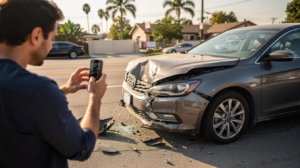 While most automatic emergency braking systems work as intended, NHTSA has received complaints about sudden braking, no braking, or inconsistent performance — problems that can lead to a brake failure accident.
Common types of brake defects include:
- False positives: The system brakes for no reason, potentially causing a secondary collision behind the vehicle.
- Failure to detect: AEB does not brake in time when a lead vehicle or pedestrian is clearly in the path, due to sensors being blocked, misaligned, or affected by weather.
- Software glitches: The system misclassifies objects or delays brake activation.
- Traditional brake failures: Hydraulic leaks, faulty master cylinders, worn brake pads — problems that exist whether or not a car has AEB.
A brake defect or AEB malfunction can change the legal picture. Instead of only a negligence claim against another driver, an injured person might also have a claim against the vehicle manufacturer, the supplier that designed the braking system, or a repair shop that serviced the brakes. The legal process requires distinguishing between a design defect (the system was poorly designed across an entire model line), a manufacturing defect (a specific car’s component was built wrong), and a failure to warn (consumers were not given clear warnings about AEB limitations).
Documenting a suspected AEB or brake defect right away is critical. Keep the vehicle. Do not have it repaired or scrapped before experts can inspect the sensors, download data, and preserve evidence. In California, these cases often require engineers or accident reconstruction experts to connect the defect, the crash, and the injuries. We can help you understand whether the facts in your situation point toward a product issue.
What to Do If You’re Hurt in a Crash
If you are in a serious collision in California — whether or not automatic emergency braking was involved — here is what to do:
- Call 911 and get medical care. Accept treatment at the scene. Follow up with a doctor even if injuries seem minor. Neck, back, and head injuries often surface hours or days later. Do not skip care because you feel fine initially.
- Document the scene. Take photos or video of vehicle positions, skid marks (or lack of them), damage patterns, and any dashboard warning lights related to brakes, forward collision warning, or ADAS features.
- Collect information. Get names, phone numbers, and insurance details from other drivers and witnesses. Note the make, model, and year of every vehicle involved — this helps identify whether specific AEB systems or recalled components might be relevant.
- Preserve the vehicle. Do not allow an insurer to send the car to a salvage yard or have it destroyed before an attorney can evaluate a potential brake failure or AEB issue.
- Know your deadline. The California statute of limitations for most personal injury cases is two years from the date of the crash under CCP 335.1. Claims against government entities or involving minors can have different deadlines. Our page on the deadlines that apply to car accident claims covers the common exceptions.
- Talk to a lawyer first. Speak with a California injury attorney before giving a detailed recorded statement to an insurance company, especially if there are questions about emergency braking or brake defects.
Older vehicles without AEB will continue to be on the road for years after 2029. Whether your crash involves old brakes or new technology, the same steps protect your rights.
Frequently Asked Questions
Is automatic emergency braking now required by law on all cars?
No. FMVSS No. 127 applies to newly manufactured light vehicles, not every vehicle already on the road. Most manufacturers must comply beginning September 1, 2029, while specified small-volume and final-stage manufacturers and companies that modify vehicles have until September 1, 2030. The rule does not require owners to retrofit older vehicles, and driving a vehicle without AEB is not automatically negligent.
Does AEB mean the driver is not at fault if a crash happens?
No. AEB does not replace the driver’s duty to use reasonable care. Investigators, insurers, and courts may examine both the driver’s conduct and the system’s performance. An AEB activation may show that the system attempted to reduce the crash, but it does not automatically eliminate driver fault.
Can I sue if the braking system or AEB failed?
Potentially. If credible evidence shows that a brake defect, software failure, or AEB malfunction contributed to the crash or increased the injuries, a product liability claim may exist in addition to a negligence claim. The vehicle and its electronic data should be preserved for inspection, and expert analysis is often necessary. No outcome can be guaranteed; liability depends on the evidence and applicable law.
Does my older car need automatic emergency braking to be legal in California?
No. The federal mandate does not require California owners to retrofit older vehicles. Drivers must still keep traditional braking systems in safe working order and comply with traffic laws. When comparing replacement vehicles, consumers may wish to review AEB, pedestrian AEB, and forward collision warning performance, not merely whether the features appear on the equipment list.
Injured in a California Crash? Talk to a Lawyer
If you were hurt in a California crash — whether in Pasadena, Los Angeles County, or anywhere else in the state — we are here to help you understand your options. The AEB mandate, brake defects, and evolving vehicle safety standards have made crash cases more technical, but you do not have to figure out liability and the value of your claim on your own.
Law Offices of Pius Joseph handles personal injury cases involving rear-end collisions, pedestrian impacts, suspected brake failure accidents, and crashes where ADAS features like AEB and forward collision warning were in play. A Pasadena car accident attorney can review police reports, vehicle data, photos, and medical records to help you understand your legal options under California law and the two-year deadline in CCP 335.1.
Contact us for a free consultation. Talking with us does not create any pressure to file a lawsuit or accept a settlement. Whether the crash involved a brand-new vehicle subject to the AEB mandate or an older car with traditional brakes, you do not have to sort this out alone.